By the time a woman books a consultation for hair loss, she has usually been noticing it for months - sometimes years. She has spent nights looking at her part line, counted strands in the shower, changed shampoos, tried supplements, and worn her hair in different ways to hide the thinning. The emotional weight of that is often underestimated.
Here is what I want every woman reading this to understand: hair loss is a medical concern, not a cosmetic one. It almost always has an identifiable cause, and in most cases, something can be done. The earlier it is addressed, the better the outcome.
What Counts as "Normal" Shedding
The average scalp sheds between 50 and 100 hairs per day. This is part of the normal hair growth cycle - old hairs fall out so new ones can grow in their place. If you are counting hair in the shower drain and the number seems high, it is worth remembering that this is expected.
What is not normal: a visibly widening part line, a see-through ponytail, noticeably reduced volume, or shedding that feels dramatically heavier than it used to. These changes warrant proper assessment.
The Most Common Causes I See in Clinic
Female Pattern Hair Loss (Androgenetic Alopecia)
This is the most common cause of chronic thinning in women. It is genetic, typically presents as progressive thinning at the top of the scalp and along the part line, and becomes more pronounced with age or hormonal shifts (menopause, PCOS). Unlike male pattern baldness, it rarely causes complete baldness - but the overall density reduces significantly if left untreated.
Telogen Effluvium
This is the "sudden shedding" pattern - usually triggered by a specific event three to four months earlier. Common triggers include childbirth, severe illness, COVID-19, major surgery, rapid weight loss, emotional stress, or starting/stopping certain medications. The hair loss is alarming but usually reversible once the trigger is addressed.
Nutritional Deficiencies
Iron deficiency is very common in women of reproductive age and is a significant driver of hair loss in the UAE population specifically. Low ferritin, low vitamin D, and low zinc are all worth checking. A full blood panel is part of any proper hair loss workup - treating topically without correcting deficiencies produces disappointing results.
Thyroid Dysfunction
Both under- and overactive thyroid can cause hair changes. Hair thinning, brittleness, and texture changes are often among the first symptoms patients notice. TSH and free T4 testing belong in any hair loss assessment.
Traction Alopecia
Repeated tension on hair follicles - tight ponytails, braids, extensions, heavy styling - can cause permanent follicular damage, usually at the hairline and temples. Early intervention is essential because advanced cases can scar and become irreversible.
Scarring Alopecias
A smaller but important category. Conditions like frontal fibrosing alopecia and lichen planopilaris cause permanent hair loss through inflammation and follicular scarring. Early diagnosis changes outcomes dramatically. These require a dermatologist, not a salon consultation.
When to See a Dermatologist
I would encourage any woman experiencing persistent changes in her hair to see a dermatologist rather than waiting. Specifically:
- If shedding has lasted longer than three months and is not slowing down
- If you are seeing visible scalp through your hair where you were not before
- If your part line is widening
- If you are noticing hair loss at specific areas (hairline, crown, patches)
- If there is any associated scalp discomfort, redness, or itching
- If you have tried hair supplements and seen no improvement after 3-6 months
A dermatologist can distinguish between different types of hair loss using clinical examination, dermoscopy (a magnified look at the scalp), and targeted blood tests. This diagnostic step is what separates effective treatment from guesswork.
What Actually Works
Treatment depends entirely on the underlying cause - which is why the diagnosis matters so much. Broadly:
- Topical minoxidil - the most well-studied treatment for female pattern hair loss. Results take 4-6 months and must be used consistently.
- Correction of nutritional deficiencies - iron, vitamin D, zinc, B12 where identified. Blanket supplementation without testing is unhelpful.
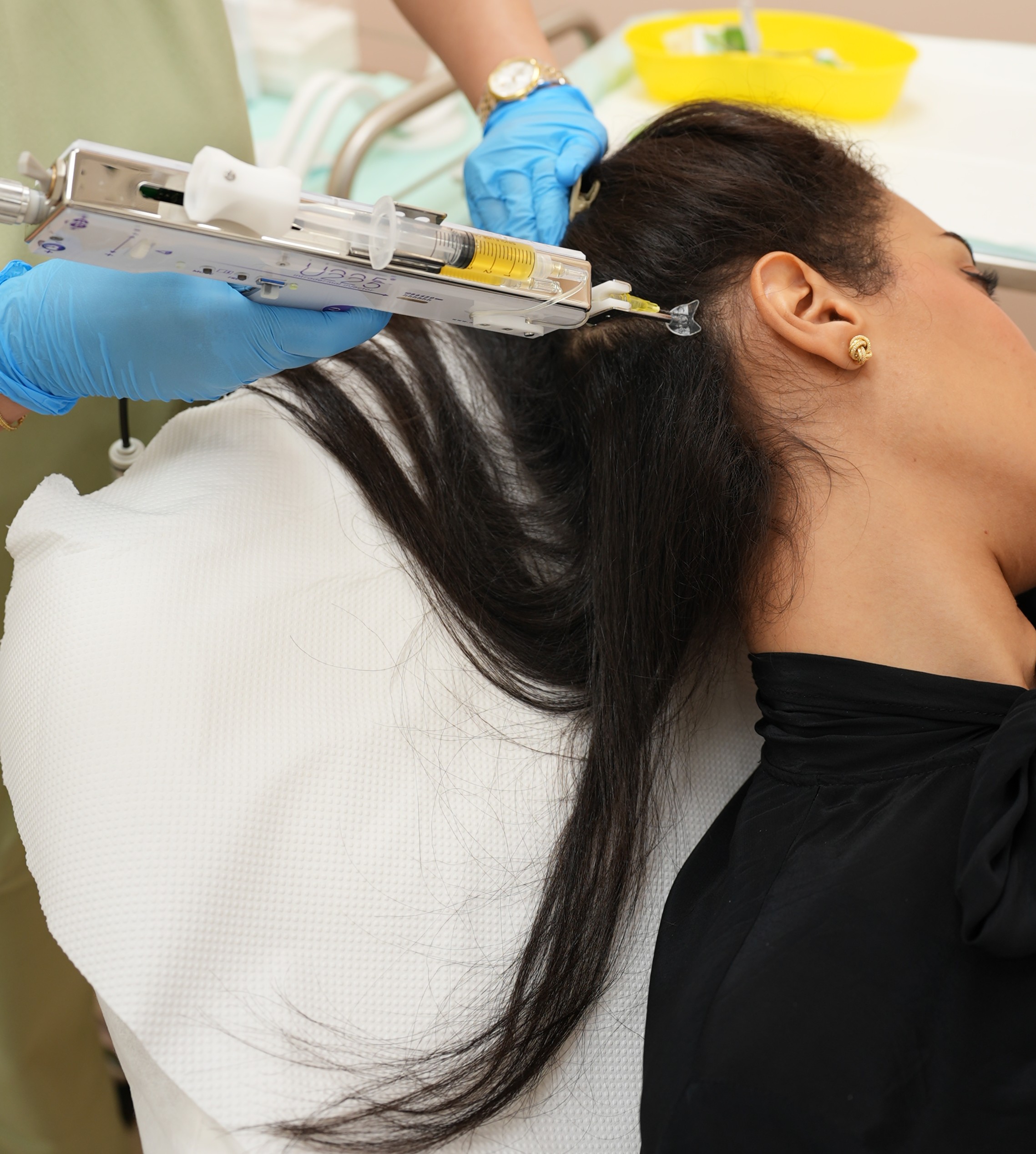
- PRP (Platelet-Rich Plasma) - an in-clinic treatment using a patient's own blood-derived growth factors. Strong evidence for androgenetic alopecia when used in appropriate candidates.
- Exosome therapy and mesotherapy - newer scalp treatments that can complement other interventions.
- Oral treatments - in selected cases, treatments like spironolactone or oral minoxidil are used, always under dermatologist supervision.
- LED light therapy - adjunctive evidence for stimulating follicular activity.
What rarely works alone: expensive shampoos, over-the-counter supplements marketed as "hair growth formulas," and castor oil. These are not harmful, but they are not a replacement for identifying the actual cause of the hair loss.
A Final Note
If you are experiencing hair loss, please do not minimize what you are feeling. Hair is deeply tied to identity - especially for women - and the distress that comes with losing it is completely valid. But please also do not assume there is nothing to be done. There almost always is.
The most important step is a proper assessment. From there, a targeted plan can be built. In my experience, patients who seek help earlier are consistently happier with their outcomes than those who wait hoping it will resolve on its own.